


Segonzac: Google Maps Leak reveals Ranking System (Geostore, Mapscore, Oyster Rank, aso.)

Aktualisiert: vor 9 Minuten
Key Takeaways:

Segonzac analyzed a leak of Google Maps Geostore and found:
72 Geostore ranking signals
793 data source providers (along with mechanisms for provenance, priority, trust, and conflation = when several sources disagree)
446 local search intent types
50,998 Mapcore styles + 12,936 label styles = Mapcore decides what to show and what not
10,936 searchable Geostore declarations
Google builds a canonical representation of the place that can incorporate data from multiple sources, survive changes in geometry, and connect to other Google identifiers, including the Knowledge Graph machine ID (MID).
Geostore also models trust levels ranging from
blocked or
untrusted sources to
trusted and
super-trusted ones
The edit of your Google Business Profile becomes another piece of evidence entering a system that may already have competing evidence
Geostore has its own ranking system called Oyster Rank with 72 signals (25 marked as deprecated) including:
Google reviews
Web query volume
Listing impressions
Listing opens
Direction requests
Website clicks
Chain membership
Wikipedia signals
Popularity
Prominence
Landmark information
Road usage
There is a further local scoring/re-ranking system with 8 scores in 13 tiers running completely offline on the device
Google appears to adapt the candidate space to both the query and what exists around the user = Distance is still fundamental in local SEO. But “I’m closer, I should rank higher” is an incomplete model
Google has a layer called webref that associates documents with entities and stores information, including topicality, confidence, geographic metadata, and document-level scores - this means, web pages are more connected to local entities than one could expect form the UI
The semantic layer goes considerably beyond the primary category visible on a listing. Google uses GConcepts, a shared conceptual vocabulary that can describe businesses, dishes, attributes, cuisines, service modes, and other concepts
That job belongs partly to Mapcore sorts out which of the thousands of potentially relevant entities receive visible labels = The visual surface includes a rendering decision after retrieval and ranking have already happened
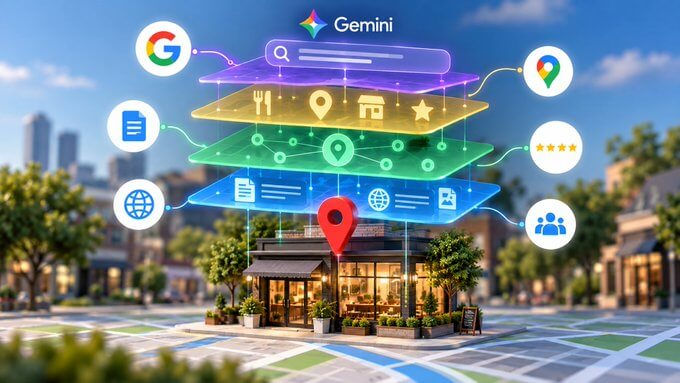
With Ask Maps Gemini can already use the built in information:
Canonical place entities
Semantic concepts and attributes
Reviews and extracted topics
Knowledge Graph relationships
Web evidence
Geographic retrieval
Behavioral signals
Personal geographic context
Listing composition
Ranking systems
Concluding: Local SEO has traditionally concentrated heavily on optimizing the Google Business Profile: categories, reviews, photos, attributes, opening hours, and other listing fields BUT answer all the questions:
What exactly is this place?
What does it offer?
Which brand or chain does it belong to?
Which concepts and attributes describe it?
Does its website describe the same entity clearly?
Which Web documents provide evidence about it?
Does Google see real demand for the brand?
What do reviews consistently say about specific aspects of the experience?
Which audiences and contexts could make this place relevant?
When should Google recommend it rather than another candidate?
"Google Maps is becoming a system able to build a representation of the physical world, link it to the Web and to entities, observe it through behaviour, contextualise it for a user, then answer in natural language."


Sources:


