


Suganthan: Google introduces Open Knowledge Format (OKF) and Agent Resource Discovery (ARD)

Aktualisiert: 4. Juli
Key Takeaways:

Google introduced new standards named "Open Knowledge Format" and "Agent Resource Discovery"
OKF for Google should work as: a vendor-neutral, agent- and human-friendly standard for representing the metadata, context, and curated knowledge that modern AI systems need.
Just markdown — readable in any editor, renderable on GitHub, indexable by any search tool
Just files — shippable as a tarball, hostable in any git repo, mountable on any filesystem
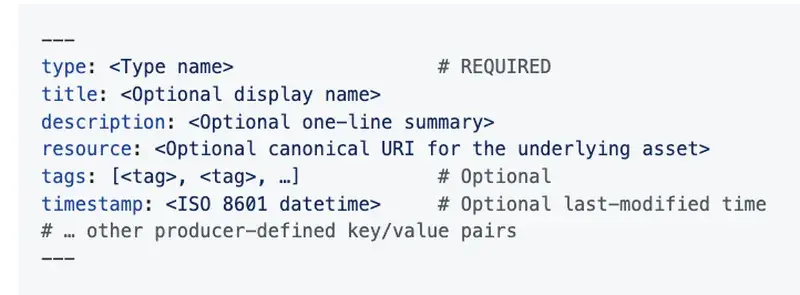
Just YAML frontmatter — for the small set of structured fields that need to be queryable: type, title, description, resource, tags, and timestamp
So instead of building your knowledge, skills or tools in every tool separately, you'll now have a standard to write your knowledge to and access from every application you are building or provide to other agents
Marie Heynes compared OKF to a even more detailled sitemap of a business and its knowledge and as per Googles explanation OKFs can be easily exchanged across business and products
Different discipline of optimization, different from GEO
Task to structure a businesses knowledge into atomic entities and their relation
Goal is to offer the knowledge for agents to use or agent builders to buy
ARD allows websites to advertise their AI capabilities by hosting a structured ai-catalog.json file at a standardized web path.
AI agents and centralized registries automatically crawl these files to instantly discover the site's APIs, tools, and MCP servers without having to guess or blindly scrape the website.
This creates a trust-verified, decentralized network where agents can easily find and interact with web services using natural language.
This is just another step towards a more agentic web that might require companies and businesses to shift even more towards becoming agentic than they're currently realizing
Example structure:
sales/
├── index.md
├── datasets/
│ ├── index.md
│ └── orders_db.md
├── tables/
│ ├── index.md
│ ├── orders.md
│ └── customers.md
└── metrics/
│ ├── index.md
└── weekly_active_users.md



Sources:


