


Peham: LinkedIn Citations in AI Chats analyzed - Pulse vs. Posts, and vs. YouTube

Key Takeaways:

Peham/Otterly analyzed 1.3 million LinkedIn AI Chat citations from ChatGPT, Perplexity, Google AI Overviews and AI Mode:
Linkedin's AI citations rose +49.9% between January to May 2026 from 7.8% to 11.7%.
People's posts get 91.7% of citations, rest goes to company posts.
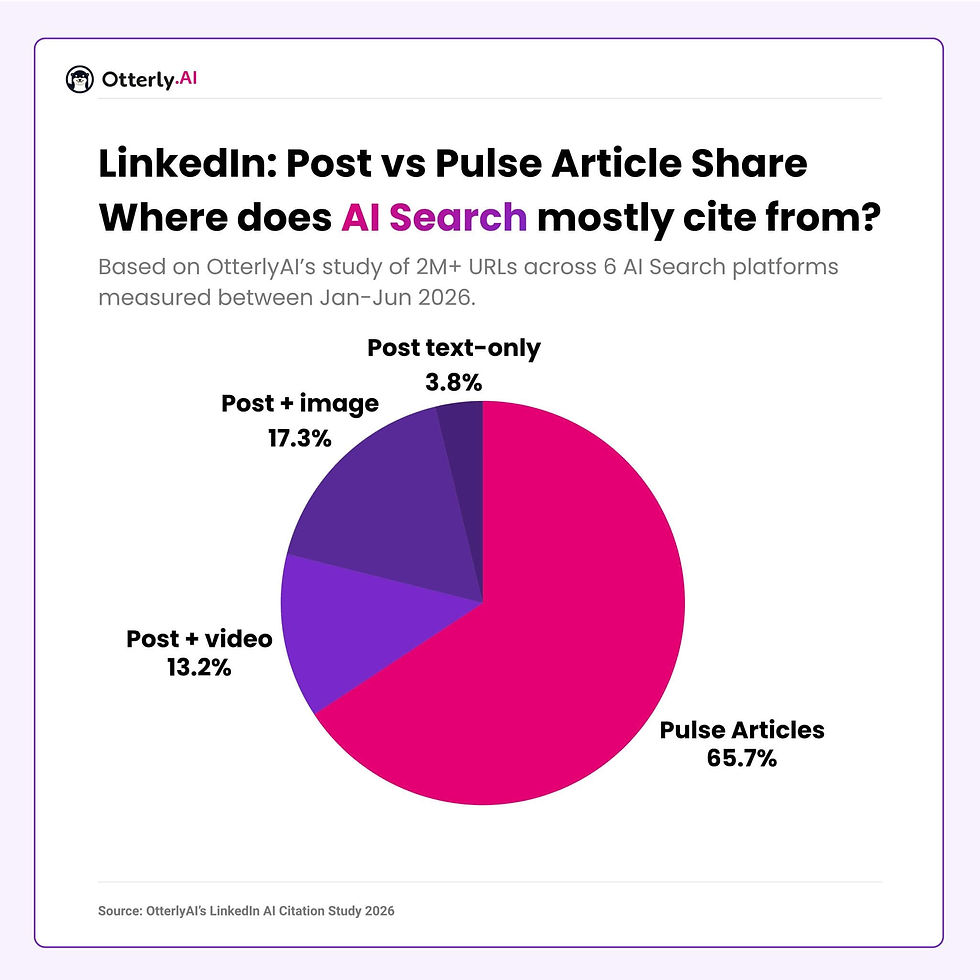
LinkedIn Pulse articles get cited far more than posts.
More engagement /adding media doesn’t increase citation
BDP / measures for increasing LinkedIn AI citations:
Publish pulse articles, not just posts. Long-form, structured LinkedIn articles are where citations concentrate. Build reference-style explainers, comparisons, and how-to pieces.
Publish under a named individual, not the company page. Content from a named individual is cited more often than company-page content, so have employees and experts post under their own names.
Write for the platforms that cite LinkedIn. Perplexity and Google AI Overviews drive most LinkedIn citations. Prioritize them and accept that Gemini will not cite LinkedIn.
Target Copilot with articles. Copilot cites pulse articles 90.2% of the time, so long-form is close to the only LinkedIn content it surfaces.
Aim for the best answer, not the biggest following. Citation tracks topic fit, clarity, and structure more than profile size. Make each article the cleanest answer to a specific question
Important: Individual monitoring and measures required! Always check your specific market and customer journeys
is LinkedIn in AI chats citations?
Do those citations shape the answer? or recommendations within the answer?
You decide where relevant visibility happens for your brand or offering
AI Search Platform | Pulse articles | Posts | Profiles |
Perplexity | 70.1% | 28.0% | 1.9% |
Google AI Overviews | 72.1% | 24.5% | 3.4% |
ChatGPT | 73.8% | 25.1% | 1.1% |
Google AI Mode | 71.3% | 23.2% | 5.4% |
Microsoft Copilot | 90.2% | 6.1% | 3.3% |
Gemini | 92.1% | 7.9% | 0.01% |



Sources:


